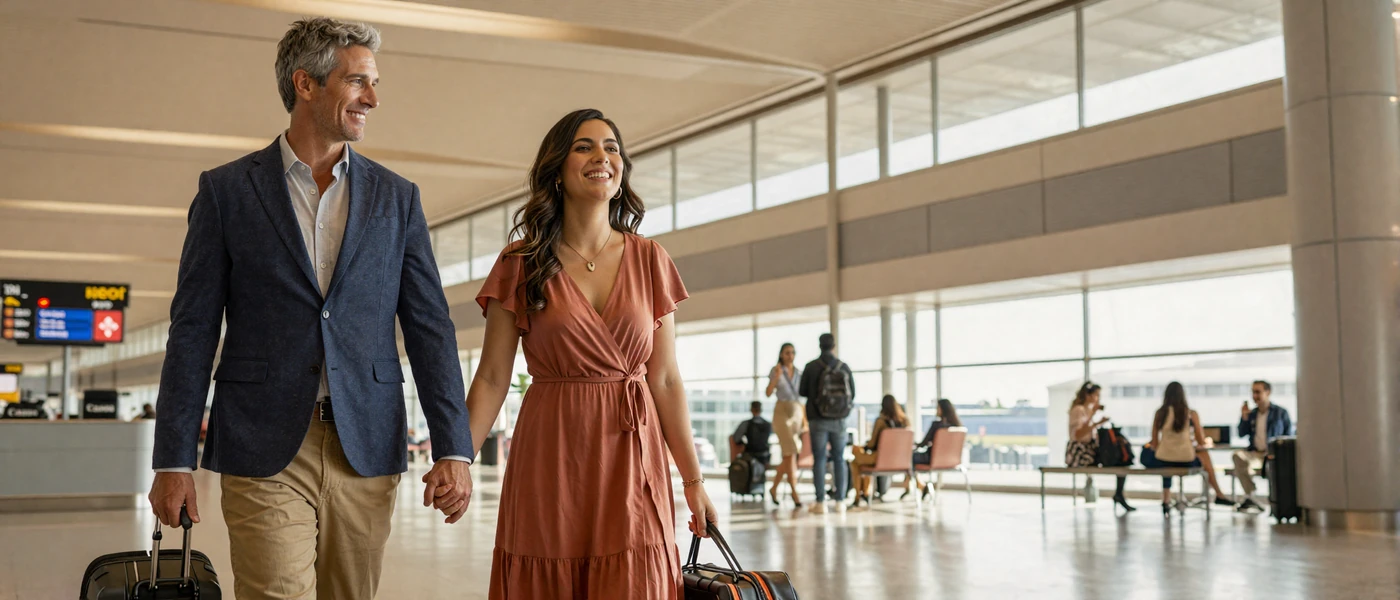
Happy American man and his Latin fiancée reuniting at an airport after K-1 visa approval

K-1 Fiancé Visa Guide for Latin Partners in 2026

Your complete roadmap to bringing the woman you love from Latin America to the United States - requirements, costs, timelines, and expert tips.

📝 By US4U Latin Team 📅 February 5, 2026 ⏱ 8 min read
Key Takeaways: The K-1 fiancé visa allows a U.S. citizen to bring their foreign-born fiancé(e) to the United States for marriage. In 2026, the total process typically takes 8-14 months and costs between $2,000-$4,500 depending on the Latin American country. You must prove a genuine relationship, meet in person within two years of filing, and marry within 90 days of your partner's arrival. This guide covers every step from petition to green card.

Understanding the K-1 Fiancé Visa for Latin American Partners

The K-1 fiancé visa is the most direct legal pathway for American men to bring their Latin American partners to the United States for marriage. Officially classified as a nonimmigrant visa, the K-1 grants your fiancée entry into the U.S. with a single purpose: to marry you within 90 days of arrival. As of 2026, U.S. Citizenship and Immigration Services (USCIS) processes approximately 40,000 K-1 petitions annually, with Latin American countries - particularly Colombia, Cuba, and Venezuela - representing a significant share of applicants.

Whether you met your partner through latin women dating online, during a trip to South America, or through mutual friends, the K-1 visa process requires patience, meticulous documentation, and a clear understanding of U.S. immigration law. This guide breaks down every stage so you can focus on what matters most - building your future together.

Who Is Eligible for the K-1 Visa?

The U.S. citizen petitioner must meet all of the following requirements:

  • U.S. citizenship: Lawful permanent residents (green card holders) cannot petition for a K-1 visa - only full U.S. citizens qualify.
  • In-person meeting: You must have met your fiancée face-to-face within the two years before filing the petition. Photo evidence, flight records, and stamped passports serve as proof.
  • Legal freedom to marry: Both parties must be legally free to marry, meaning any prior marriages must be terminated through divorce, annulment, or death of a former spouse.
  • Genuine relationship: USCIS evaluates evidence that your relationship is bona fide - not entered into solely for immigration benefit.
  • Financial support: The petitioner must demonstrate the ability to financially support the fiancée at 125% above the federal poverty level using Form I-134, Affidavit of Support.

K-1 Visa Requirements at a Glance

The following table summarizes each major stage, its requirements, and the estimated processing time as of early 2026:

K-1 fiancé visa process stages, timeline, and costs for 2026
Stage What Happens Estimated Duration Filing Fee
I-129F Petition U.S. citizen files Form I-129F with USCIS 6-9 months $580
USCIS Approval Petition approved and forwarded to NVC 2-4 weeks after approval Included
NVC Processing National Visa Center assigns case number, forwards to embassy 4-8 weeks No additional fee
DS-160 Application Fiancée completes online visa application 1-2 weeks $265
Medical Examination Fiancée undergoes required medical exam at approved physician 1-2 weeks $100-$300 (varies by country)
Embassy Interview Fiancée attends in-person interview at U.S. embassy/consulate Scheduled 2-8 weeks after NVC Included in DS-160 fee
Visa Issuance & Travel Visa issued, fiancée enters the U.S. within 6 months Days to weeks after approval N/A
Marriage Couple must legally marry within 90 days of entry 90-day deadline Varies by state ($30-$100)

Timeline and Costs for the K-1 Visa in 2026

The total K-1 visa process from initial filing to your fiancée's arrival in the United States typically spans 8 to 14 months. Here is a realistic breakdown of what to expect financially:

Step 1: Filing the I-129F Petition (Months 1-9)

You begin by filing Form I-129F, Petition for Alien Fiancé(e), with USCIS. The filing fee is $580. This is the longest single stage - USCIS processing times have fluctuated between 6 and 9 months depending on the service center handling your case. During this period, USCIS verifies your citizenship, reviews your evidence, and conducts background checks on both parties.

Step 2: National Visa Center Processing (Months 9-11)

Once approved, your case transfers to the National Visa Center (NVC), which assigns a case number and forwards the file to the appropriate U.S. embassy or consulate in your fiancée's home country. For Latin American applicants, embassies in Bogotá, Havana, Caracas, Mexico City, Lima, and São Paulo handle the majority of K-1 interviews.

Step 3: Embassy Interview and Visa Issuance (Months 11-14)

Your fiancée completes the DS-160 online application ($265 fee), undergoes a medical examination ($100-$300 depending on the country), and attends her consular interview. If approved, the visa is typically issued within days.

Total Estimated Cost: $2,025-$4,500 including USCIS fees ($580), DS-160 ($265), medical exam ($100-$300), Adjustment of Status after arrival ($1,440), and miscellaneous expenses such as document translation, certified copies, and travel for the in-person meeting requirement. Attorney fees, if you hire one, range from $1,500-$3,500.

Essential Documents You Will Need

Thorough documentation is the single most important factor in a successful K-1 petition. Missing or incomplete paperwork is the leading cause of delays and denials. Here is what both the petitioner and the beneficiary need:

His Documents (U.S. Citizen Petitioner)

  • Proof of U.S. citizenship (passport or birth certificate)
  • Valid government-issued photo ID
  • Divorce decrees or death certificates (if previously married)
  • Evidence of in-person meeting within 2 years (photos, boarding passes, passport stamps)
  • Form I-134 Affidavit of Support with tax returns, W-2s, pay stubs
  • Evidence of genuine relationship (chat logs, call records, photos together, letters)
  • Police clearance (FBI background check if requested)

Her Documents (Latin American Fiancée)

  • Valid passport from her home country
  • Birth certificate (translated and certified if not in English)
  • Divorce decrees or annulment papers (if applicable)
  • Police clearance certificates from every country where she has lived for 6+ months after age 16
  • Medical examination results (Form I-693 equivalent for K-1)
  • Passport-style photographs meeting U.S. visa photo requirements
  • Evidence of relationship from her side (matching the petitioner's documentation)
Start Your Journey - Meet Latin Women Now

Before the visa process begins, find your perfect match. Thousands of genuine Latin women from Colombia, Cuba, Venezuela, and beyond are looking for committed American partners.

Valentina, 27, Colombian woman seeking serious relationship through K-1 visa dating

Valentina

27 · Bogotá, Colombia

Marisol, 31, Cuban woman interested in K-1 fiancé visa process with American partner

Marisol

31 · Havana, Cuba

Gabriela, 29, Venezuelan woman looking for marriage with American man

Gabriela

29 · Caracas, Venezuela

Camila, 26, Colombian woman from Medellín seeking American partner for marriage

Camila

26 · Medellín, Colombia

Yanelis, 33, Cuban woman from Santiago interested in dating American men for marriage

Yanelis

33 · Santiago de Cuba

Andrea, 28, Colombian woman from Barranquilla seeking K-1 visa relationship

Andrea

28 · Barranquilla, Colombia

Luisana, 30, Venezuelan woman looking for serious American partner

Luisana

30 · Valencia, Venezuela

Daniela, 25, Colombian woman from Cartagena seeking marriage with American man

Daniela

25 · Cartagena, Colombia

Preparing for the Embassy Interview

The consular interview is the final and most critical step before your fiancée receives her K-1 visa. Interviews at U.S. embassies in Latin America - including the popular consulates in Bogotá, Mexico City, and Santo Domingo - generally last 10 to 20 minutes. Here is how to prepare effectively:

  1. Compile Ironclad Evidence of a Genuine Relationship

    The consular officer's primary concern is whether your relationship is real. Bring printed photos of you together (with dates written on the back), screenshots of regular communication (WhatsApp, video calls), boarding passes from visits, receipts from restaurants or hotels visited together, and any cards or letters exchanged. Quality and consistency of evidence matter more than volume.

  2. Practice Common Interview Questions

    Consular officers typically ask: How did you meet? When did you first meet in person? What are your plans after marriage? Where will you live? How do you communicate given any language barrier? Your fiancée should answer honestly and consistently with the information in your petition. Rehearse together via video call, but ensure answers sound natural, not scripted.

  3. Dress Appropriately and Arrive Early

    Your fiancée should dress in business casual - clean, modest, and respectful. Arriving 30 minutes early allows time for security screening and settling nerves. She should bring all original documents in a well-organized folder, with copies separated by section.

  4. Organize Documentation in a Logical Order

    Create a tabbed binder or folder with sections: identity documents, relationship evidence, financial support (your I-134 and supporting docs), medical examination results, and police clearances. When the officer asks for a specific document, being able to produce it immediately demonstrates seriousness and preparation.

  5. Address Potential Red Flags Proactively

    Large age gaps (15+ years), short relationships (under 6 months), or inability to communicate in a common language can raise concerns. If any of these apply, prepare extra evidence showing the depth of your connection - longer communication history, multiple in-person visits, evidence of learning her language, or testimony from friends and family who have witnessed your relationship.

After Arrival: The 90-Day Marriage Deadline and Adjustment of Status

Once your fiancée enters the United States on her K-1 visa, a strict 90-day clock begins. You must legally marry within this period - there are no extensions. After the wedding, the next step is filing Form I-485, Application to Register Permanent Residence (Adjustment of Status), which costs $1,440 as of 2026. This application includes biometrics, another medical exam (if the initial one has expired), and an interview at your local USCIS field office.

During the Adjustment of Status period - which can take 8-14 months - your spouse receives an Employment Authorization Document (EAD) and Advance Parole (travel document), allowing her to work legally and travel outside the U.S. without jeopardizing her case. Once approved, she receives a two-year conditional green card. Before that card expires, you jointly file Form I-751 to remove conditions and obtain a permanent 10-year green card.

⚠️ Important: If you fail to marry within 90 days, your fiancée must leave the United States. Overstaying the K-1 visa can result in a 3- or 10-year bar from re-entering the country. Plan your wedding early - even a simple courthouse ceremony satisfies the legal requirement.

Common Pitfalls to Avoid

Thousands of K-1 petitions are delayed or denied each year due to preventable mistakes. Here are the most common pitfalls for couples in long-distance Latin relationships:

  • Insufficient relationship evidence: USCIS wants to see ongoing, consistent communication. A few photos from one trip is not enough - provide months of chat logs, call records, and visit documentation.
  • Incomplete or incorrectly signed forms: Even a missing signature or wrong checkbox can trigger a Request for Evidence (RFE), adding 2-3 months to processing time.
  • Not meeting the income requirement: The petitioner must earn at least 125% of the federal poverty level for their household size. For a household of two in 2026, this is approximately $25,550 annually. If you fall short, a joint sponsor can file an additional I-134.
  • Previous immigration violations: If your fiancée has previously overstayed a U.S. visa or been denied entry, this must be addressed directly in the petition with supporting documentation.
  • Waiting too long after the in-person meeting: You must have met your fiancée in person within two years of filing. If your meeting was 18 months ago, file soon - or plan another visit to reset the clock.
  • Not hiring an immigration attorney when needed: While the K-1 can be filed without a lawyer, complex cases (prior denials, criminal history, prior marriages) benefit significantly from professional legal guidance.

For men who are just beginning their first trip to meet a Latin girlfriend, understanding the visa process early gives you a realistic framework for your relationship timeline. And if you are still deciding which country is right for you, our guide to the best Latin countries to find a wife in 2026 can help narrow your search.

K-1 Visa FAQs for Latin Dating Couples

The complete K-1 process - from filing Form I-129F to your fiancée's arrival in the U.S. - typically takes 8 to 14 months. The longest stage is USCIS processing of the initial petition, which averages 6-9 months. Embassy scheduling and interview processing adds another 2-4 months depending on the specific consulate in your fiancée's Latin American country.

Find Your Future Fiancée - Join Free

Connect with verified Latin women who are serious about love and marriage. Your journey starts with a simple conversation.